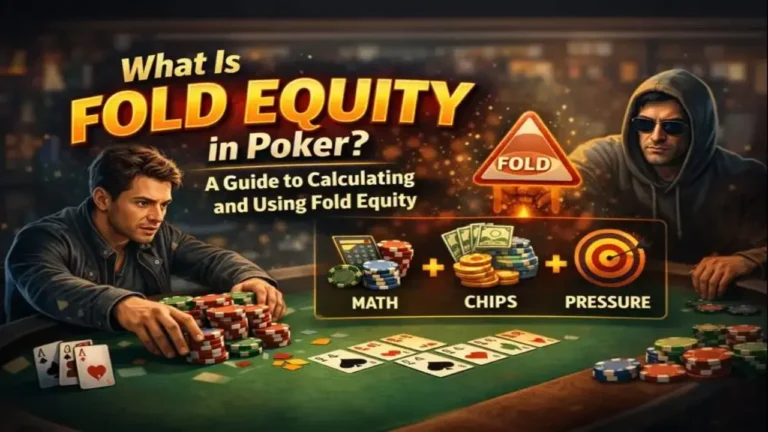
What is Fold Equity in Poker? Fold Equity Meaning, Formula & How to Calculate

By Don • Last updated January 20, 2026
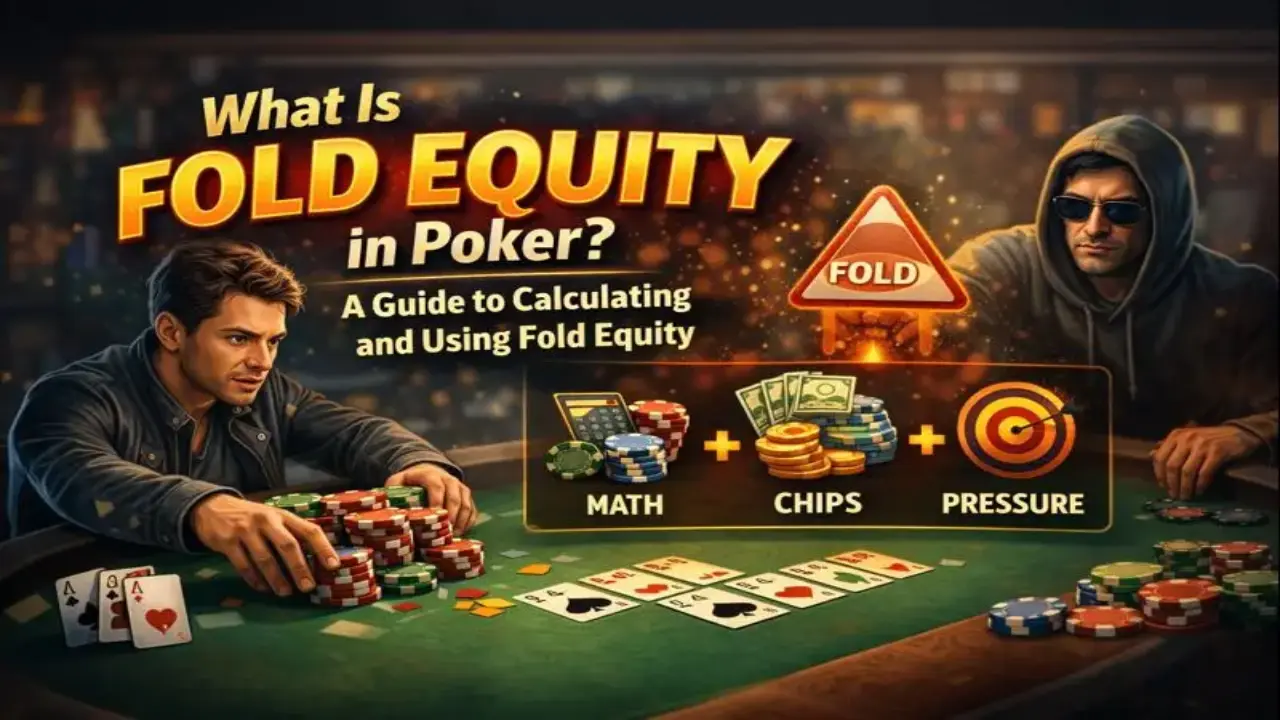
What does fold equity mean in poker? Learn the poker fold equity formula, how to calculate it, when it matters most, and how to use it to maximize EV in bluffs, semi-bluffs, and tournament plays.
What is Fold Equity in Poker?
The Meaning of Fold Equity is the Chance that Your Opponent will Fold, Multiplied by the Size of the Pot
Fold equity is the value you gain from the chance your opponent will fold when you bet or raise. It’s not about having the best hand it’s about putting pressure on your opponent and winning without ever seeing a showdown.
Every time you make an aggressive move a bluff, a continuation bet, a semi-bluff you’re banking on some amount of fold equity. If your opponent folds even a fraction of the time, that adds real EV (expected value) to your play.
There are really two ways to win a hand in poker: you either get to showdown with the best hand, or you make your opponent fold. Fold equity is what makes the second option work and it’s a big part of what separates strong players from passive ones.
In today’s game, especially with tougher competition and solvers in the mix, fold equity is essential. Knowing when your opponent is likely to give up and how to make them do it turns average spots into profit-makers.
How to Calculate Fold Equity in Poker
Poker Fold Equity Formula = Fold %×Pot Size
Let’s talk numbers but keep it simple. The basic idea behind fold equity is this: when you make a bet, there’s a chance your opponent folds. That chance has value. The basic poker fold equity formula is Fold Equity = Fold %×Pot Size.
Say there’s $200 in the pot and you think your opponent will fold 50% of the time. Just that chance adds $100 in value to your bet. And that’s before we even consider what happens if they call maybe you still win with a draw or a weak made hand. That’s extra EV on top.
So when you’re deciding whether to bet, it’s not just “Do I have the best hand?” It’s “How often can I get a fold, and what’s that worth?” Combine that with your hand equity (how often you’ll win if called), and you get the total expected value (EV):
Total EV = (Fold % × Pot) + (Call % × Your Equity When Called)
Getting these numbers exactly right isn’t easy poker isn’t math class. But you can make solid estimates based on how your opponent plays, the board texture, and your history together. If you use a HUD, fold-to-cbet and fold-to-3bet stats can help too.
Quick tip: the best bluff spots are when you have some equity (like a straight or flush draw) and you’re up against someone who actually folds worse hands. That’s how you turn fold equity into a weapon and not just wishful thinking.
Try checking out Redchippoker’s fold Equity calculator to practice the concept.
When Fold Equity Matters Most
Fold equity isn’t always in play. There are spots where it’s gold and others where it barely exists. Knowing when it’s most valuable can turn your aggression into profit instead of pain. Let’s walk through the big factors.
Opponent Profiles: Tight vs Loose
Who you’re up against makes all the difference. Tight players hate getting out of line they’ll fold to pressure, even with decent hands. They’re your best targets for fold equity. On the other hand, loose or sticky players don’t give up easily. Against them, your bluffs need real backup, like a draw or a solid plan to barrel future streets.
Stack Size Dynamics
Fold equity shifts a lot depending on stack sizes. In tournaments, short stacks often shove to put max pressure on mid-stacks especially when ICM is a factor. That’s classic fold equity at work. In cash games, deeper stacks let you apply pressure across multiple streets, building fold equity from flop to river.
Position, Board Texture, and Table Image
Position is power especially when you’re bluffing. If you raised preflop and the flop comes ace-high, you can credibly rep a strong hand. That alone can earn you folds. Board texture matters too, dry boards offer more fold equity than wet, draw-heavy ones. And don’t forget your table image. If you’ve been playing tight, your bets carry more weight. But if you’ve been in every pot, your fold equity drops fast.
Fold Equity vs Showdown Equity: A Strategic Balance
Winning at poker isn’t just about having the best hand it’s how you play it! when to show it and when to make your opponent fold. That’s the balance between fold equity and showdown equity, and it’s one of the biggest skill edges in the game.
Showdown equity is all about how often your hand will win if you get called and see all five cards. Fold equity is about how often your bet makes the other player give up. Both matter but in different situations.
If you’ve got a solid made hand like top pair, top kicker your showdown equity is high, and there’s not much need to bluff. You’re looking to get called by worse. But if you’re holding a draw or air, and your opponent is fold-prone? That’s when fold equity can make your hand profitable right now, even before you hit anything.
Smart players know how to read the moment. Should you go for thin value, or is this the perfect spot to fire a bluff? If you always rely on one type of equity, you’re leaving money on the table. The real trick is knowing which one to lean on and when to flip the script mid-hand.
Common Mistakes with Fold Equity
Fold equity is powerful but only when it’s used right. A lot of players get burned by chasing fold equity in spots where it just doesn’t exist. Here are the biggest mistakes to avoid if you want to stop bluffing into the void.
Overestimating How Often People Fold
This is mistake number one. Just because you would fold in a spot doesn’t mean your opponent will. Some players call just to “see one more card” or because they don’t believe you. Always think about who you’re up against fold equity is only real if they’re actually willing to fold.
Misjudging Your Bluff Credibility
Every bluff tells a story and it has to make sense. If you suddenly fire big on a river that doesn’t change much, ask yourself: what are you really representing? If your opponent can’t imagine a hand you’d play that way for value, your fold equity drops fast. Good players sniff out bluffs that don’t add up.
Folding Out Only Worse Hands
This one hurts: you bet big, they fold… but the only hands folding were worse than yours. Congrats, you just bluffed the bottom of their range and let better hands stick around. If your bluff isn’t getting better hands to fold or worse hands to call, you’re leaking chips.
Fold Equity in Tournaments vs Cash Games
Fold equity shows up in both tournaments and cash games, but how you use it changes depending on the format. In tournaments, it’s often a lifeline. In cash games, it’s a tool for long-term profit. Let’s break down the key differences.
ICM Pressure Changes Everything
In tournaments, ICM (Independent Chip Model) adds extra value to survival. That means players fold more often when busting would cost them prize money. This creates spots where your fold equity spikes especially near the bubble or on final tables. Shoving into risk-averse stacks becomes a super profitable move. Check out GTO Wizards blog on ICM basics.
Stealing vs Value Aggression
Stealing blinds in tournaments is a fold equity goldmine. Those blinds and antes add up fast, so winning uncontested pots without a showdown is a huge edge. In cash games stealing has less impact, there’s no pressure to ladder up, so players defend more, and your fold equity often drops unless your sizing or timing is perfect.
Short Stack Shoving and Fold Frequency
Short stacks in tournaments rely heavily on fold equity. A well-timed jam from the small blind or button can pick up chips without a fight. Knowing how often opponents will fold to a shove is critical and there are charts for that. In cash, short-stack play is rare, but the same logic applies when you’re shallow: leverage fold equity before you’re pot-committed.
Practical Fold Equity Scenarios and Examples
It’s one thing to talk about fold equity it’s another to see it in action. Let’s walk through a few realistic hand scenarios where fold equity plays a major role. These spots come up all the time and understanding how to spot them is what separates solid regs from button-clicking bluffers.
Walkthroughs of Real Hands
Example 1: Semi-Bluff on the Turn
You raise it up preflop with K♠Q♠ and get one caller. The flop comes 10♠7♦2♠. You c-bet and get called. The turn is a blank 4♣. You double barrel. Why? Because you’ve got a strong draw plus fold equity. If your opponent folds any one-pair hands, you’re already winning. If not, you still have 15 outs to improve.
Example 2: River Bluff on a Scare Card
You triple barrel with air on a board that runs out A♦9♣6♠J♥K♠. You opened pre, so the ace and king hit your range. If your opponent has a hand like 9♠9♥ or A♣6♣, you might fold them out with the right sizing. This is pure fold equity no showdown value, just pressure on a board that favors you.
Calculating Fold Equity Mid-Hand
You don’t need exact numbers while playing, but a quick mental estimate helps. Ask yourself: how often will they fold here? What’s in the pot? How much do I need to bet? If you think they fold 40% of the time and the pot is $200, that’s $80 in fold equity worth factoring in before you fire.
Key Takeaways from High-Level Examples
Watch any high-stakes stream or solver breakdown, and you’ll see fold equity being used surgically. The best players aren’t just betting because “they might fold” they’re betting because folding is profitable. They choose spots where their range is stronger, the board texture helps, and their image backs it up.
Fold Equity in Poker Overview
If you take one thing away from all this, let it be this: fold equity is how you win when you don’t have the best hand. It’s the reason your bluffs work, the reason semi-bluffs print, and the edge that turns good players into great ones.
But it’s not magic. It only works if your opponent’s actually willing to fold and if your bet tells a story they believe. That means thinking about position, board texture, your image, and who you’re up against. It’s not just pushing buttons it’s reading the moment.
Next time you’re debating a bluff, pause and ask: “Do they fold here?” If the answer’s yes and you’ve got even a little backup equity fire away. That’s fold equity doing its job. If not, maybe it’s time to chill and wait for a better spot.

Leave a Reply