
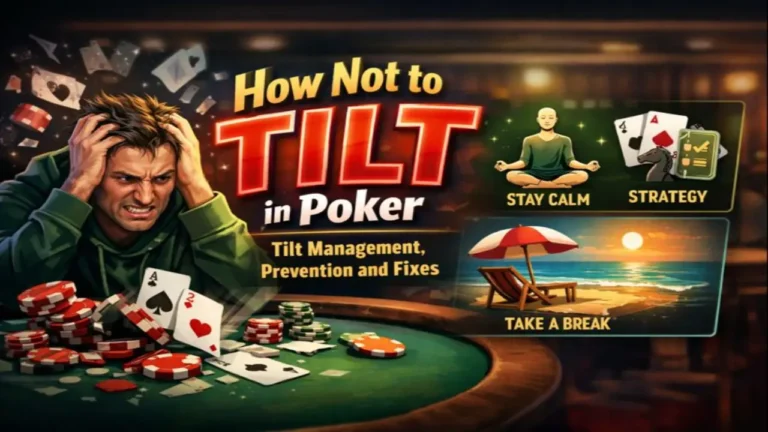
How Not to Tilt in Poker | Tilt Management, Prevention and Fixes

By Don • Last updated January 20, 2026
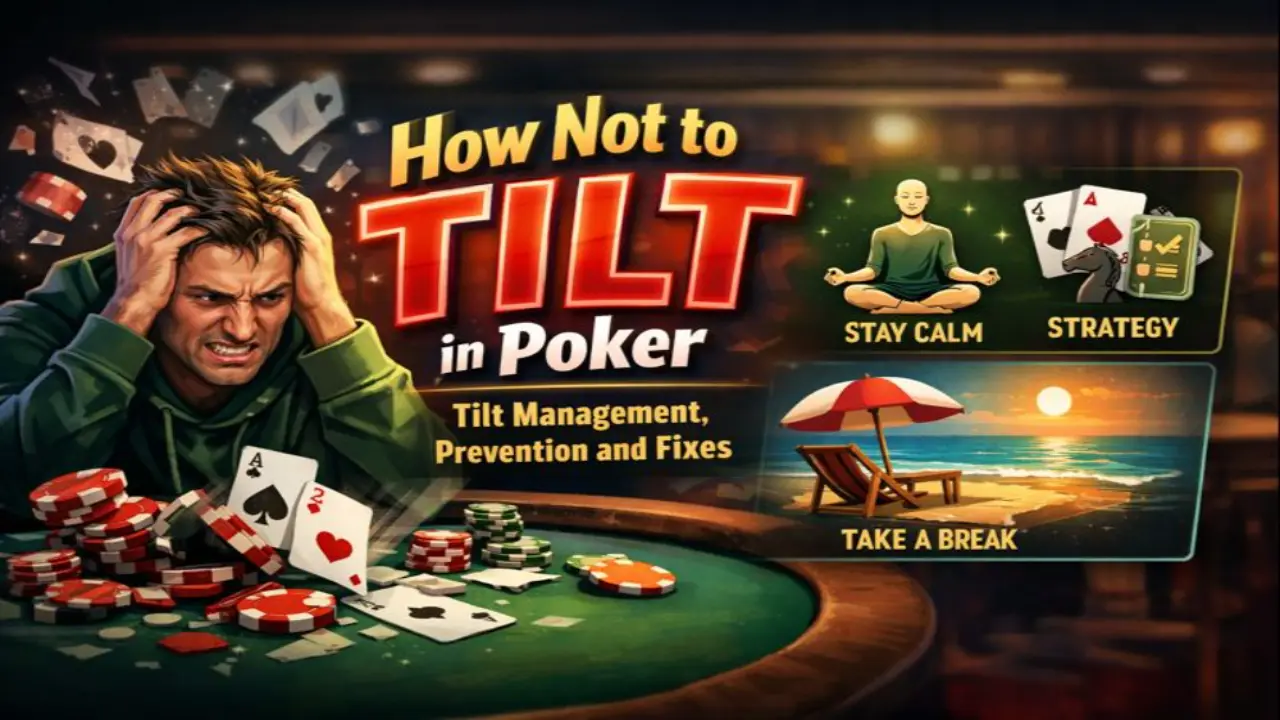
Learn how not to tilt in poker with expert strategies for tilt prevention, in-game emotional control, and recovery tools to keep your bankroll and mindset intact.
How to Avoid Tilt at the Poker Table
Pre-Session Tilt Prevention Strategies
Learning how not to tilt in poker starts before you even sit down to play. Just as would not walk into a gym without warming up, you shouldn’t enter a session without checking your mental state.
Here’s how to tilt-proof your mindset before the cards hit the felt:
Set your session goals clearly. Are you grinding volume? Practicing discipline? Once you define your focus, it’s easier to stay in control.
Avoid playing tired, angry, or distracted. Emotional baggage leaks into gameplay fast. If your real life is chaotic, poker will punish you for it.
Use pre-game rituals. Breathing exercises, journaling, or even reviewing hand goals help prime your focus and boost emotional control in poker.
Prevention isn’t just preparation it’s insurance against future blowups.
In-Session Tilt Management
When the bad beats hit and they will your reaction determines your outcome.
Here’s how to maintain poker tilt control in real time:
Use a trigger phrase. Something simple like “reset” or “breathe” when you feel the frustration rising.
Take micro-breaks. Step away for 60 seconds. Don’t “power through” tilt. That’s how bankrolls die.
Label your emotional state. Say it out loud: “I’m frustrated because I lost a big pot.” Naming it separates you from it.
Switch gears if needed. Drop down in stakes, table count, or even move to study mode.
Staying calm in-game isn’t about being stoic it’s about using tools when your mental edge slips.
How Bankroll Management Reduces Tilt
It might sound dry, but bankroll management is emotional control in disguise.
Playing above your bankroll is like tightrope walking without a net one slip, and it’s emotional freefall.
Stick to buy-in rules. Follow the classic 20–40 buy-ins per stake rule to absorb variance without panic.
Avoid chasing losses. Bankroll discipline keeps you from “getting even,” one of the biggest tilt triggers.
Track your emotional leaks. If you’re tilting harder at a certain stake or format, that’s data. Downsize or adjust.
By protecting your bankroll, you’re not just preserving money you’re creating emotional safety that helps you stay cool under pressure
for more info on bankroll management check out this guide from PokerNews.
Recognizing Tilt Before It Controls You
Early Warning Signs of Tilt
The worst tilt isn’t the loudest it’s the one you don’t notice until your stack’s gone.
To master how to avoid tilt in poker, you need to spot it early, while you can still course-correct. Here are some underrated red flags:
You’re clicking fast without thinking.
You’re arguing with opponents in chat.
You feel like you need to “win it back” ASAP.
You’re breaking from your normal strategy, chasing pots or bluffing recklessly.
Think of tilt like a leak in your emotional dam. If you catch the drips, you don’t have to deal with the flood.
Physical vs Mental Tilt Triggers
Tilt isn’t just in your head sometimes your body knows you’re off before your brain does.
Physical tilt triggers:
Racing heartbeat
Tensed shoulders
Clenched jaw
Fidgeting or face-touching
Mental tilt triggers:
Obsessing over one bad beat
Blaming variance for every hand
Getting mad at regs or fish
Self-talk that turns toxic (“I always screw this up”)
Being aware of these tells builds the foundation of emotional control in poker. You don’t have to suppress tilt you just have to catch it in the act.
In-Game Examples of Tilt Decisions
Let’s make it real. These are actual tilt-driven decisions players make when they’re not emotionally checked in:
Calling rivers with pure air just because “they always bluff me.”
3-bet jamming light after getting sucked out on.
Flatting instead of folding out of spite or “I want to see it.”
Changing your table or stake mid-session while steaming.
This is why learning how not to tilt in poker is a mindset skill. It’s less about the specific play and more about the why behind it.
Fixing Tilt: Recovery After Emotional Blowups

Post-Tilt Review and Recovery Process
You tilted. It happens. What matters now is how you bounce back and yes, there’s a right way to do it.
Step 1: Step away. Don’t jump into another session. You’re not “due” to win it back.
Step 2: Review the damage honestly. Pull up your hand history, find the moment the wheels came off, and ask yourself what triggered it.
Step 3: Journal the experience. Write out what happened, how you felt, and what you’ll do next time. It’s simple but this creates long-term growth.
You’re not just fixing your game you’re fixing your relationship with tilt. That’s real poker mindset work.
Mental Game Tools and Tilt Coaches
Want to take your tilt recovery seriously? You don’t have to do it alone.
Some powerful tools for managing and healing tilt:
“The Mental Game of Poker” by Jared Tendler, a must-read classic for understanding tilt patterns
Primed Mind app: audio mindset training built for poker players
Meditation or breathwork apps like Headspace or Insight Timer
Work with a tilt coach, especially useful if tilt is killing your winrate at key moments
Dealing with tilt isn’t about never feeling emotion it’s about building tools that stop it from hijacking your game.
How Poker Pros Deal with Tilt
Ever wonder how poker pros deal with tilt so well? They train for it!
High-level players build anti-tilt systems into their routines:
Self-awareness practices
Schedule breaks, even during live tournaments
A detached mindset toward results they know the line was good, even if the river was cruel
talking through stradegy and certain spots with other players
They treat tilt like any other leak in their game: identify it, patch it, move forward.
What Does Tilt Mean in Poker?
Defining Tilt and Its Variants
Tilt is when your emotions take the wheel and drive your poker game off a cliff.
What does tilt mean in poker? It’s any mental or emotional state that causes you to make subpar decisions whether it’s frustration, ego, revenge, fear, or pure burnout.
It shows up in different flavors:
Frustration tilt: You’re annoyed and it’s bleeding into your play.
Entitlement tilt: You think you deserve to win, and you’re mad when you don’t.
Revenge tilt: You want to punish a specific player or “get it back.”
Desperation tilt: You start making reckless plays because you’re stuck.
Tilt isn’t binary. You can be mildly tilted or fully off the rails. Knowing where you are on that scale is key to regaining control.
What Is Monkey Tilt?
Monkey tilt is the nuclear version of tilt.
It’s when you’re completely out of control clicking buttons, punting stacks, rage-firing rebuys. It’s not calculated; it’s chaos.
What is monkey tilt? It’s a total emotional override. You’re no longer playing poker you’re just reacting.
It usually looks like:
Jamming garbage hands preflop just to “show them”
Calling down massive bets with no plan
Playing 10x your normal stakes out of nowhere
Blasting off until your balance hits zero
Monkey tilt is rare for pros because they’ve learned the hard way. But if you’re not careful, one bad session can send you there fast.
Why Players Go on Tilt
Tilt doesn’t come from bad beats it comes from how you respond to them.
Here are the real triggers behind most tilt:
Attachment to short-term results. You expect poker to reward you now, and when it doesn’t, you lash out.
Overconfidence or ego. You believe you’re the best at the table and hate being wrong or losing.
Poor life balance. If your entire self-worth rides on poker, every downswing hits like a gut punch.
Fatigue or hunger. Seriously. You’re not immune to biology, your brain tilts harder when your body’s fried.
Learning how to prevent tilt in poker means learning how to manage your entire system, not just your strategy.
How Not to Tilt in Poker Overview

Learning how not to tilt in poker isn’t just about staying calm it’s about building the right mental habits, self-awareness, and emotional resilience that keep your strategy intact under pressure.
From pre-session prep and bankroll discipline to recognizing tilt early and recovering after blowups, every level of the game demands tilt control.
Tilt is part of poker. However with the right tools, awareness, and mindset shifts, it doesn’t have to control you.
Mastering your emotional game is the final edge and the one most players ignore.

Leave a Reply