
How to Deal Texas Holdem Poker: Step-by-Step Dealer Guide for Beginners

By Don • Last updated May 27, 2026
Learn how to deal Texas Holdem poker step by step, including shuffling, dealing preflop, running the flop, turn, and river, plus the best poker shuffling techniques for smooth home games.
Step-by-Step Texas Holdem Poker Dealing Guide
Okay, learning exactly how to deal Texas Holdem poker properly makes every game run smoother, whether you’re hosting a casual home game with friends or running a more serious low-stakes setup. A good dealer keeps the action moving, they control the pace of the table and prevent unnecessary confusion during hands.
The great thing about dealing Texas Holdem is that it is much easier than most would think and once you understand the order of play and the basic dealer responsibilities, the entire process becomes second nature after a few rounds.
In this step-by-step Texas Holdem poker dealing guide, we’ll walk through everything from shuffling the deck (including the 3 best shuffling techniques!) to starting the next hand correctly.
How to Shuffle & Deal Preflop
All hands in Texas Holdem begin with the shuffle. Before cards are dealt, make sure the deck is complete with all 52 cards and that the button position is clearly established. The dealer button rotates clockwise after every hand and determines the order of betting and blind placement.
The two players to the left of the dealer button post the small blind and big blind. Once the blinds are posted, the dealer shuffles the deck thoroughly.
After shuffling, the player sitting immediately to the dealer’s right typically cuts the deck. The dealer then combines the deck again and prepares to deal.
To begin dealing preflop:
- Start with the player immediately left of the dealer button.
- Deal one card face down to each player moving clockwise.
- Repeat the process until every player has two hole cards.
- Keep the cards low to the table for cleaner and more professional dealing.
When all players receive their two cards, the first betting round begins. Action starts with the player sitting to the left of the big blind.
One of the biggest mistakes beginner dealers make is rushing the preflop deal. Staying calm and consistent helps avoid exposed cards and dealing errors.
How to Deal the Flop
After the preflop betting round is complete, it’s time to deal the flop. In Texas Holdem dealer rules, community cards are always dealt with a burn card first.
A burn card is the top card of the deck placed face down before revealing community cards. This small step helps protect the integrity of the game and prevents players from gaining accidental information about the deck.
Here’s the correct process for dealing the flop:
- Take the top card from the deck and place it face down.
- Deal three community cards face up in the center of the table.
- Position the flop neatly so every player can clearly see the cards.
Once the flop is on the board, the second betting round begins. Action now starts with the first active player sitting to the left of the dealer button.
Good dealers keep the pot organized during this stage. If chips become messy or mixed together, it becomes harder to track bets and side pots later in the hand.
How to Deal the Turn & River
Once the flop betting round ends, the dealer follows the same pattern for both the turn and river cards.
Now before revealing each new community card, the dealer burns one card face down from the top of the deck.
To deal the turn:
- Burn one card face down.
- Place one card face up next to the flop.
- Allow the next betting round to begin.
The river follows the exact same structure:
- Burn one final card.
- Deal the fifth and final community card face up.
- Run the last betting round.
Many beginner dealers often do forget burn cards when learning how to deal Texas Holdem. While casual home games may overlook this occasionally, building proper habits early makes the game feel more authentic and professional.
After the river betting round finishes, remaining players reveal their hands at showdown and the winning hand takes the pot.
How to Move on to the Next Hand
Once the pot has been awarded, the dealer prepares the table for the next hand. This part of the game is often overlooked, but efficient transitions help keep poker games flowing smoothly.
Start by collecting all cards from players and the board into a single deck. Double-check that no cards remain hidden under chip stacks or cups before reshuffling.
Next, move the dealer button one seat clockwise. The blinds also shift one position clockwise for the upcoming hand.
Before dealing again:
- Confirm the small blind and big blind are posted correctly.
- Shuffle thoroughly.
- be sure the deck is cut.
- Begin the next preflop deal.
The truth is, best poker dealers maintain a steady rhythm without rushing players. A clean, controlled pace keeps the game enjoyable while reducing mistakes and disputes.
Now once you’ve dealt a few rounds, the entire process starts to feel automatic. Like most poker skills, repetition builds confidence quickly.
Top 3 Shuffling Techniques for Texas Holdem Poker
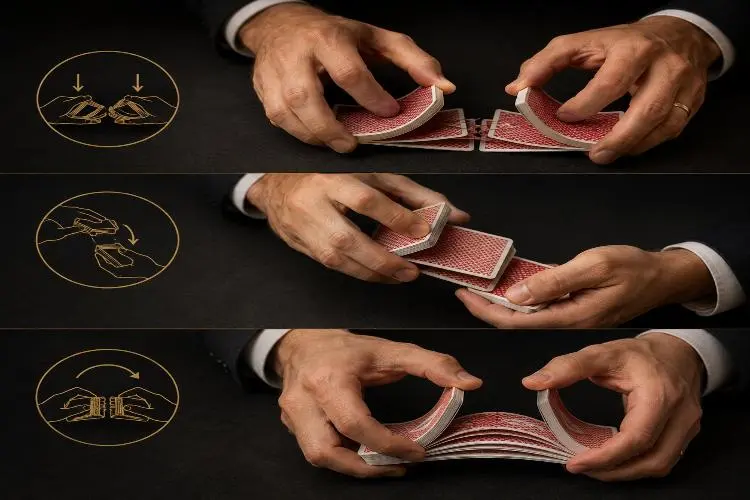
A smooth shuffle does more than make you look like an experienced dealer. Proper shuffling helps protect the integrity of the game, prevents card tracking, and keeps hands completely random. If you’re learning how to deal Texas Holdem poker, mastering a few reliable shuffling methods is just as important as learning the betting rounds.
You do not need casino-level mechanics to run a good poker game, either. Even simple, controlled shuffles done consistently are more effective than flashy tricks that constantly drop cards across the table.
These are the three most common and useful Texas Holdem poker shuffling techniques every dealer should know.
| Jump to Each Poker Shuffle Technique | ||
 Riffle Shuffle | 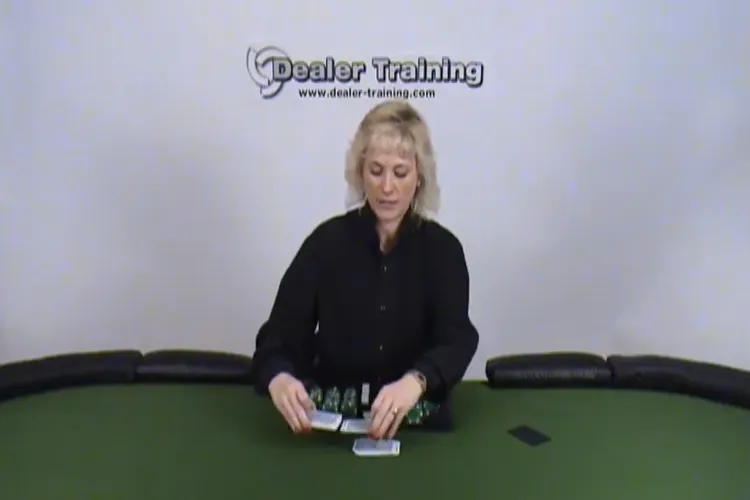 Strip Shuffle | 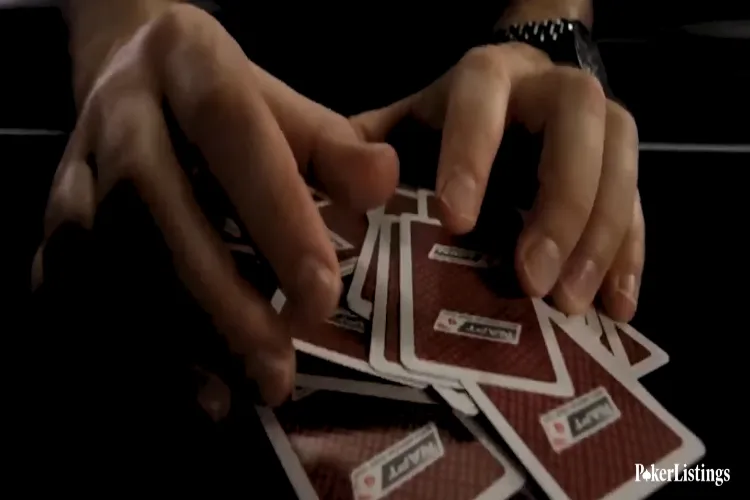 Wash Shuffle |
How to Do the Riffle Shuffle in Poker
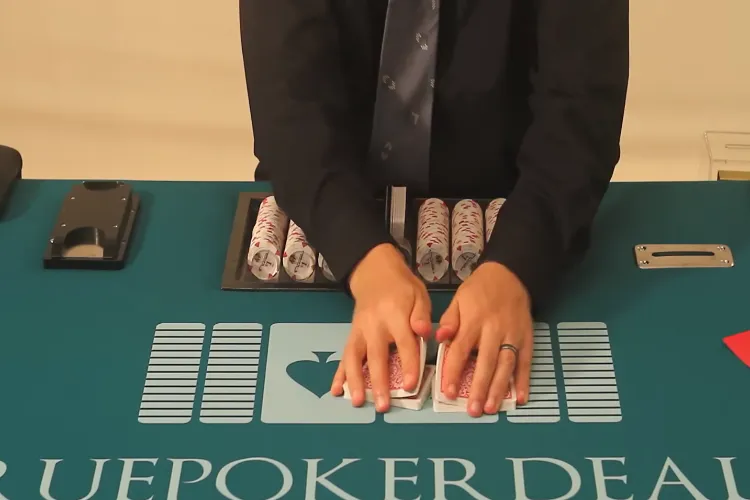
Riffle Shuffle by @truepokerdealer on Youtube
The riffle shuffle is the classic poker shuffle most players recognize instantly. It’s widely used in casinos because it mixes cards efficiently while maintaining a professional rhythm at the table.
To perform a riffle shuffle:
- Split the deck into two even halves.
- Hold each half with your thumbs along the inner edges.
- Release the cards gradually so they interleave together.
- Push the deck back into a single stack.
At first, the riffle shuffle can feel awkward for beginners. The key is controlling the cards slowly instead of trying to force speed immediately.
Most experienced dealers combine multiple riffle shuffles before each hand to ensure proper randomization. In many home games, two or three clean riffles followed by a cut is more than enough.
If you want your dealing to instantly feel more polished, this is the first shuffle worth practicing regularly.
How to Do the Strip Shuffle in Poker (Box Shuffle)
Strip Shuffle by @pokerdealertraining3402 on Youtube (Box Shuffle)
The strip shuffle, also known as the box shuffle, is commonly used alongside riffle shuffles to break up card patterns even further. While it looks simple, it adds another layer of mixing that helps prevent clumps of cards from staying together.
To do a strip shuffle (box shuffle):
- Hold the deck in one hand.
- Use the opposite hand to pull small groups of cards from the top.
- Re-stack those groups in a new order.
- Repeat until the full deck has been transferred.
The strip shuffle is less flashy than the riffle, but it’s extremely practical. Many poker dealers use it between riffles to improve overall card randomization.
One of the best things about the strip shuffle is how beginner-friendly it is. Even players with smaller hands or limited dealing experience can perform it smoothly after a few tries.
If you’re hosting a home game, combining a riffle shuffle with a strip shuffle creates a solid and trustworthy shuffle sequence without overcomplicating the process.
How to Do the Wash Shuffle in Poker
Wash Shuffle by @PokerListings on Youtube
The wash shuffle is one of the easiest and most effective ways to randomize cards, especially before a new game begins. It’s also commonly called the “scramble” shuffle.
Instead of splitting the deck, all cards are spread face down across the table and mixed around using both hands.
To perform a wash shuffle:
- Spread all 52 cards face down on the table.
- Mix the cards together in random circular motions.
- Continue scrambling for around 30 to 60 seconds.
- Gather the cards back into a full deck.
The wash shuffle is especially useful after changing decks or starting a fresh poker session because it completely destroys any remaining card order.
Many casual poker players feel more comfortable after seeing a wash shuffle because it visibly proves the deck is thoroughly mixed. It also helps newer dealers avoid weak shuffles that leave noticeable patterns in the cards.
While casinos usually combine wash shuffles with machine shuffling or multiple riffles, home games can rely on this method alone when simplicity matters most.
Texas Holdem Poker Dealing FAQ’s
Who gets dealt first in Texas Holdem?
In Texas Holdem poker, the first card is always dealt to the player sitting immediately left of the dealer button. The dealer continues clockwise around the table until every player has received two hole cards.
Even in games with a dedicated dealer, the button position still determines the order of action and blind placement for every hand.
Do you burn a card before every street?
Yes. Standard Texas Holdem dealer rules require a burn card before the flop, turn, and river.
Before revealing new community cards, the dealer places the top card of the deck face down. This helps prevent players from gaining information from marked cards or accidental flashes during the deal.
In total, three burn cards are used during every full hand of Texas Holdem.
How many cards does each player get?
Each player receives two private hole cards during the preflop deal. These cards remain hidden from other players unless a showdown occurs at the end of the hand.
The five community cards dealt in the center of the table are shared by everyone. Players use any combination of their two hole cards and the five community cards to build the best possible five-card poker hand.
What happens if the dealer makes a mistake?
Dealer mistakes happen in both home games and casinos. Common errors include exposing cards, skipping players during the deal, or forgetting a burn card.
In casual games, players usually correct the issue immediately and continue the hand fairly. In casinos or tournaments, the floor staff may step in to apply official poker rules depending on the situation.
The best way to avoid mistakes is by maintaining a steady dealing pace instead of rushing through hands.
Can the dealer play in home games?
Absolutely. In most home games, players rotate the dealer button after every hand, meaning everyone takes turns dealing while also participating in the game.
This rotating structure is one reason learning how to deal Texas Holdem is so useful. Even casual poker nights run much smoother when every player understands the basics of dealing correctly.
How long does it take to learn poker dealing?
Most beginners can learn the basics of poker dealing within a single session. Understanding the order of betting rounds and remembering when to burn cards are usually the biggest early hurdles.
After a few games, dealing starts to feel natural. Confidence mainly comes from repetition, especially when handling chips, shuffling smoothly, and keeping track of action around the table.
How to Deal Texas Holdem Poker Overview
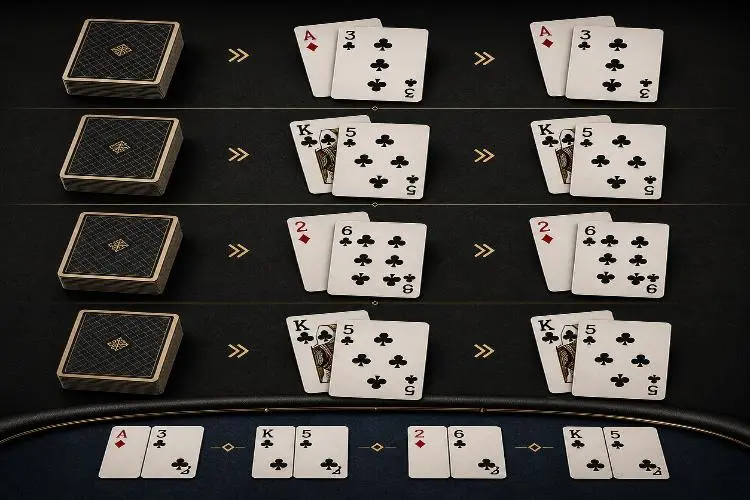
Learning how to deal Texas Holdem poker is one of the fastest ways to improve the quality of any poker game. A confident dealer keeps hands organized, prevents confusion, and helps maintain a smooth pace from start to finish.
Once you understand the basic flow shuffle, deal preflop, run the flop, turn, river, and reset for the next hand the process becomes surprisingly simple. Adding solid shuffling techniques and consistent dealing habits makes the game feel even more professional.
Whether you’re hosting casual home games or just want a better understanding of Texas Holdem poker dealing, mastering these fundamentals will make every session run cleaner and more efficiently.






Leave a Reply